
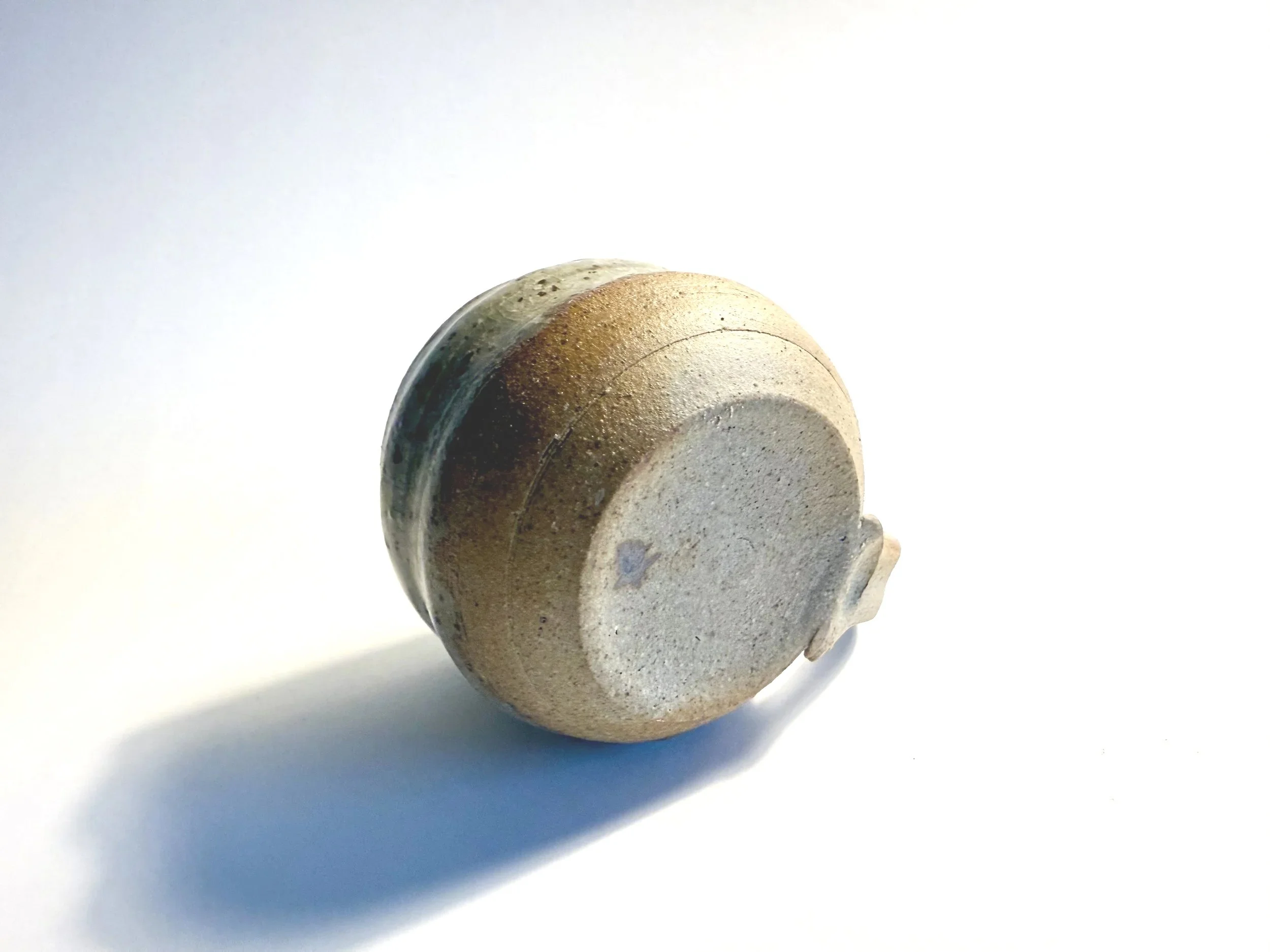
Ceramics: craft as practice
Pots that are functional, beautiful, and real.
Featured Products
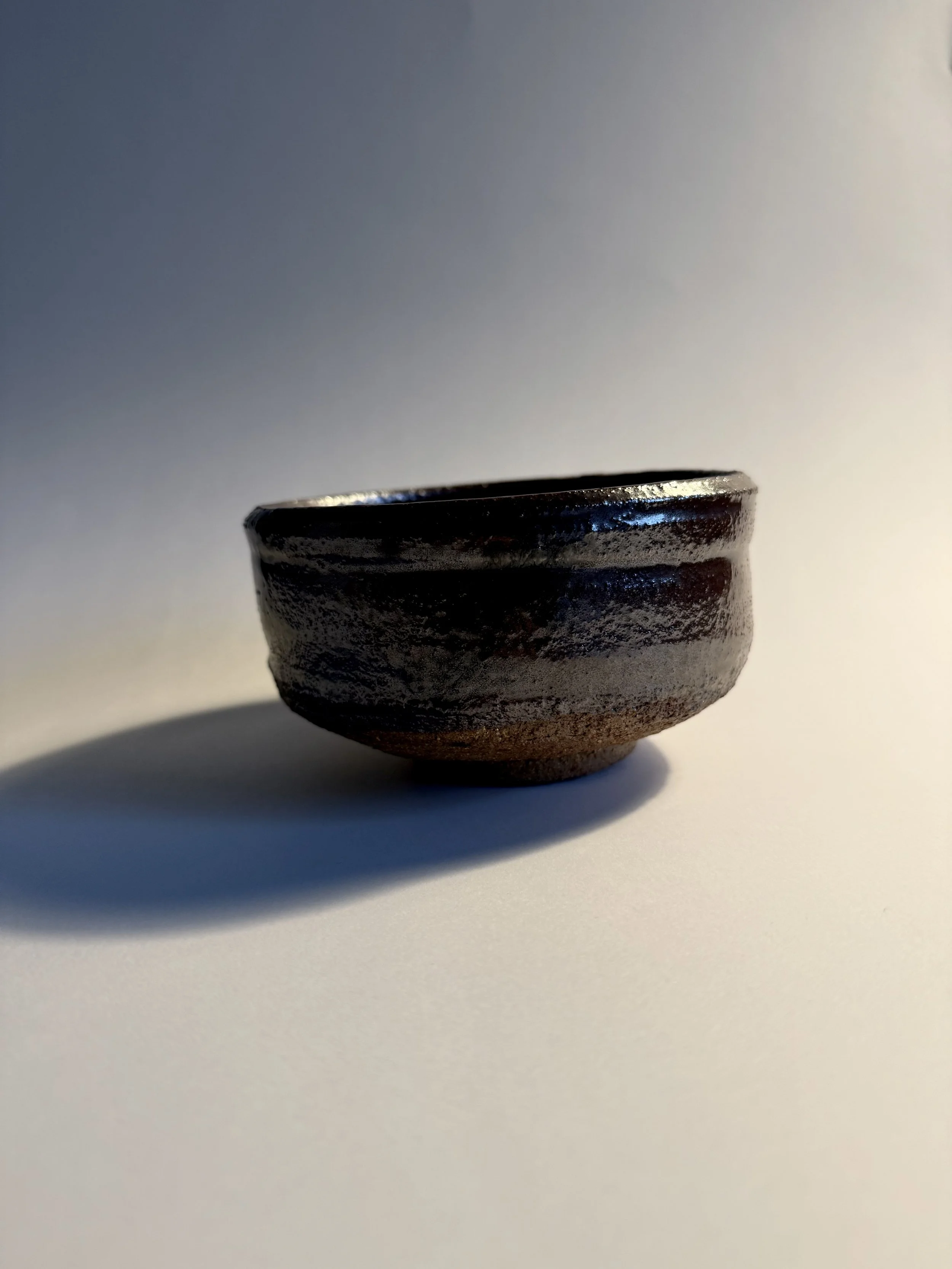
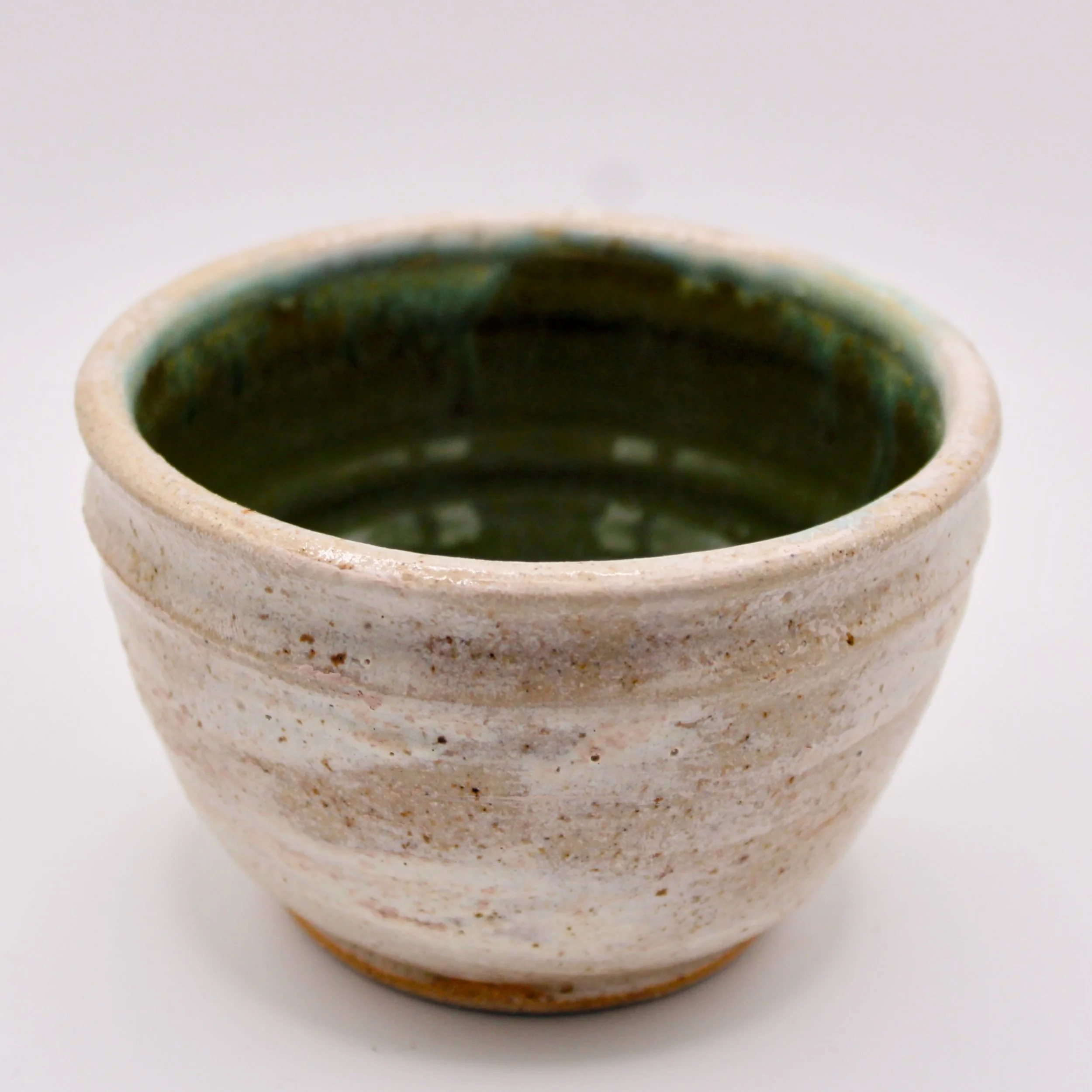
Thrown on a kickwheel and fired in a wood-fire kiln, these two tea bowls are as close to how they used to be made as possible. The clay has some crank in it (for a ‘rough’ look) and the bowl is purposefully not fully symmetric. Glazed in a traditional Tenmoku glaze, which goes slightly metallic in the firing. Dishwasher and microwave safe.
Each bowl will hold about 400ml of liquid.
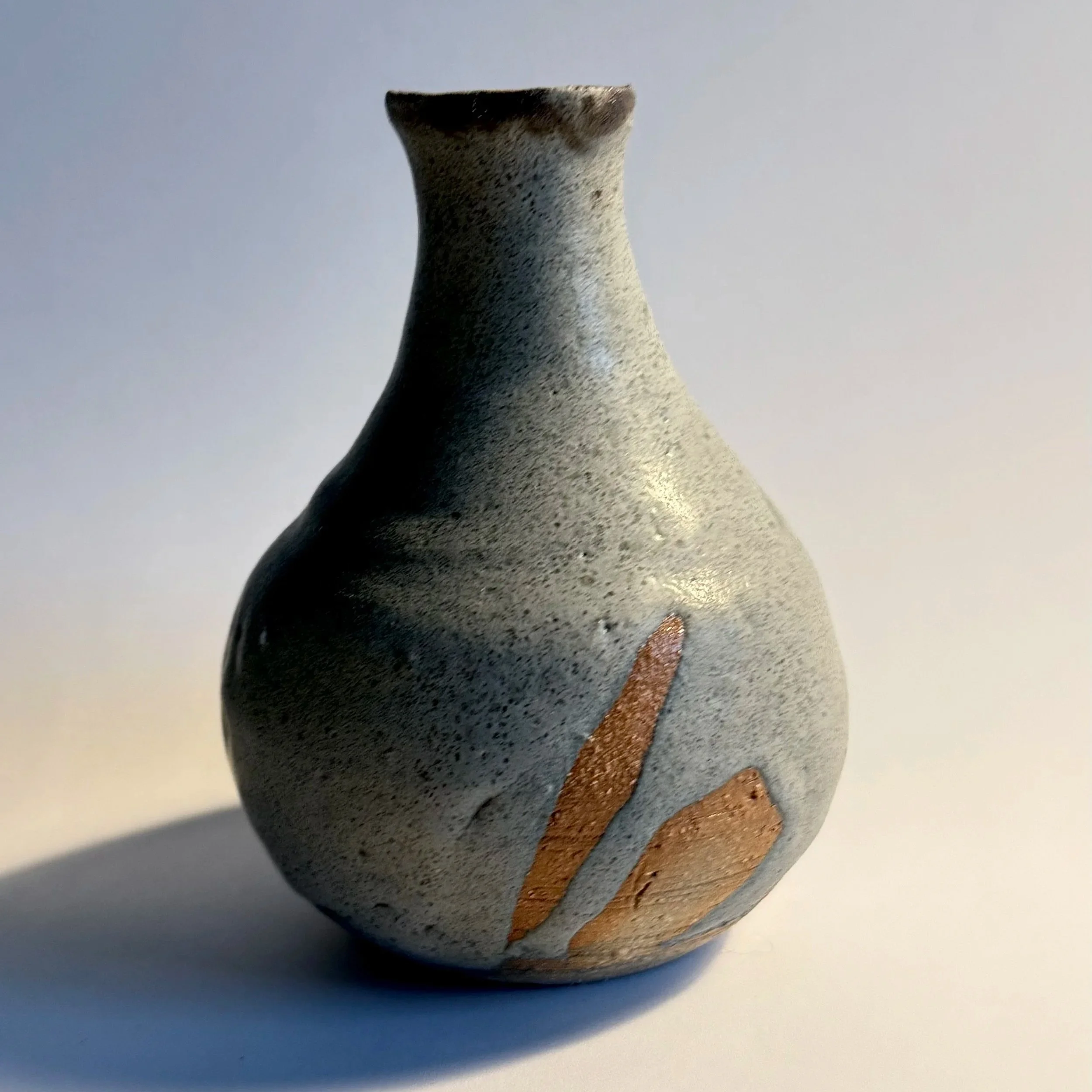
This small bud vase is wheel-thrown in stoneware and finished with a softly textured glaze in cool grey-green tones, breaking to reveal warm clay beneath. The gently waisted form rises from a rounded base to a narrow neck, designed to hold a single stem or small seasonal cutting with quiet elegance.
Subtle surface variation and exposed clay flashes are the result of hand application and firing, making each piece unique. Balanced, restrained, and tactile, the vase works equally as a sculptural object or a functional accent for a table, shelf, or bedside.
The vase is approximately 13cm tall and 9cm wide.
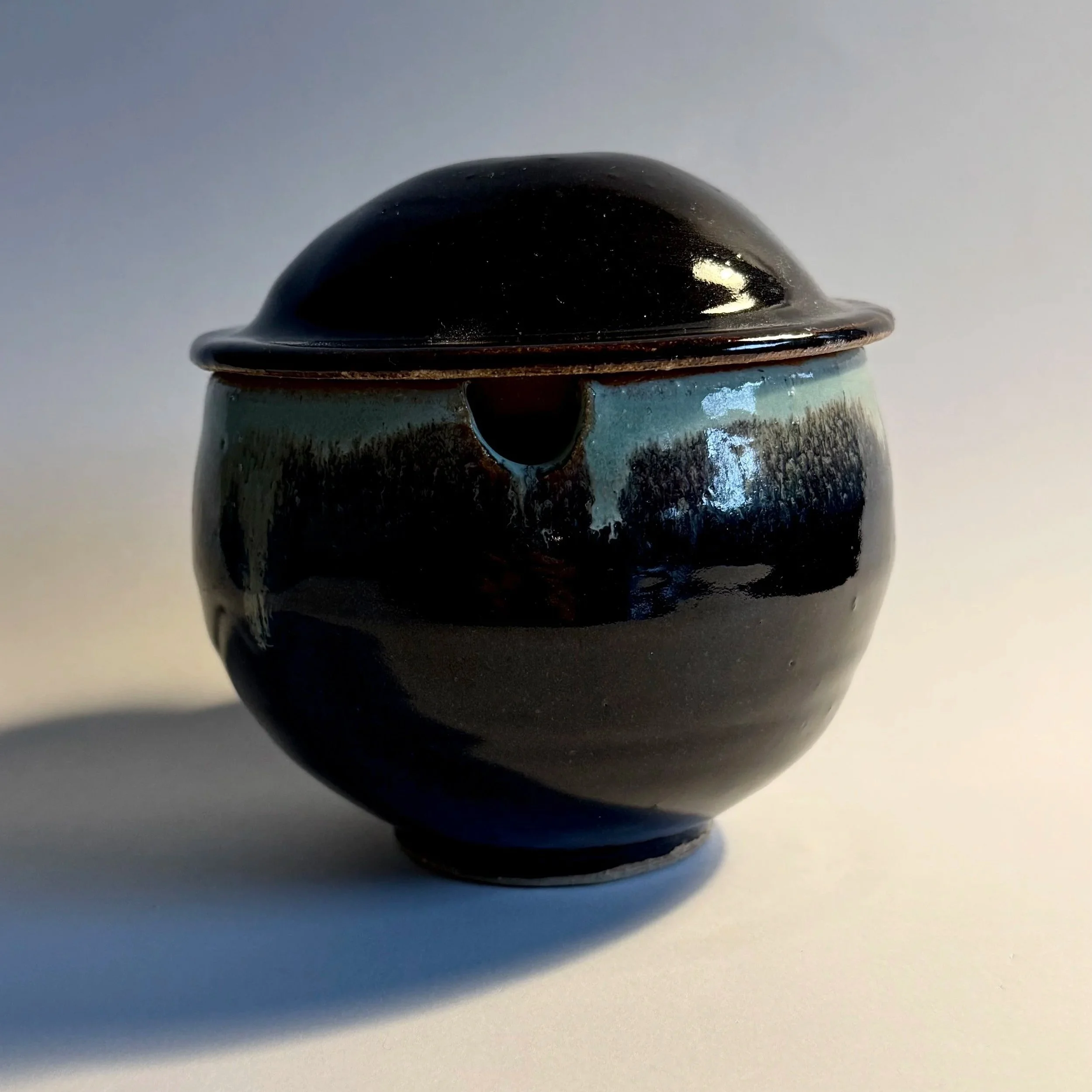
A medium sized lidded jar based on a Leach standard ware shape from the 1950s. My version has a dark Tenmoku glaze on the outside and a turquoise on the inside, with some interesting rivulets where they overlap. Small hole for a spoon.
The jar is approximately 15cm x 15 cm.
About me
I’m Ruth, the maker behind RG Clay. I create small batches of functional stoneware, thrown and finished by hand in my London studio. My work brings together the clarity and usefulness of Bauhaus design with the material character of the British studio pottery tradition.
I think carefully about the sustainability and impacts of my practice. As a result, I only produce small amounts of work, using local materials wherever possible. Each piece is individually made from stoneware clay, and fired using food-safe glazes.